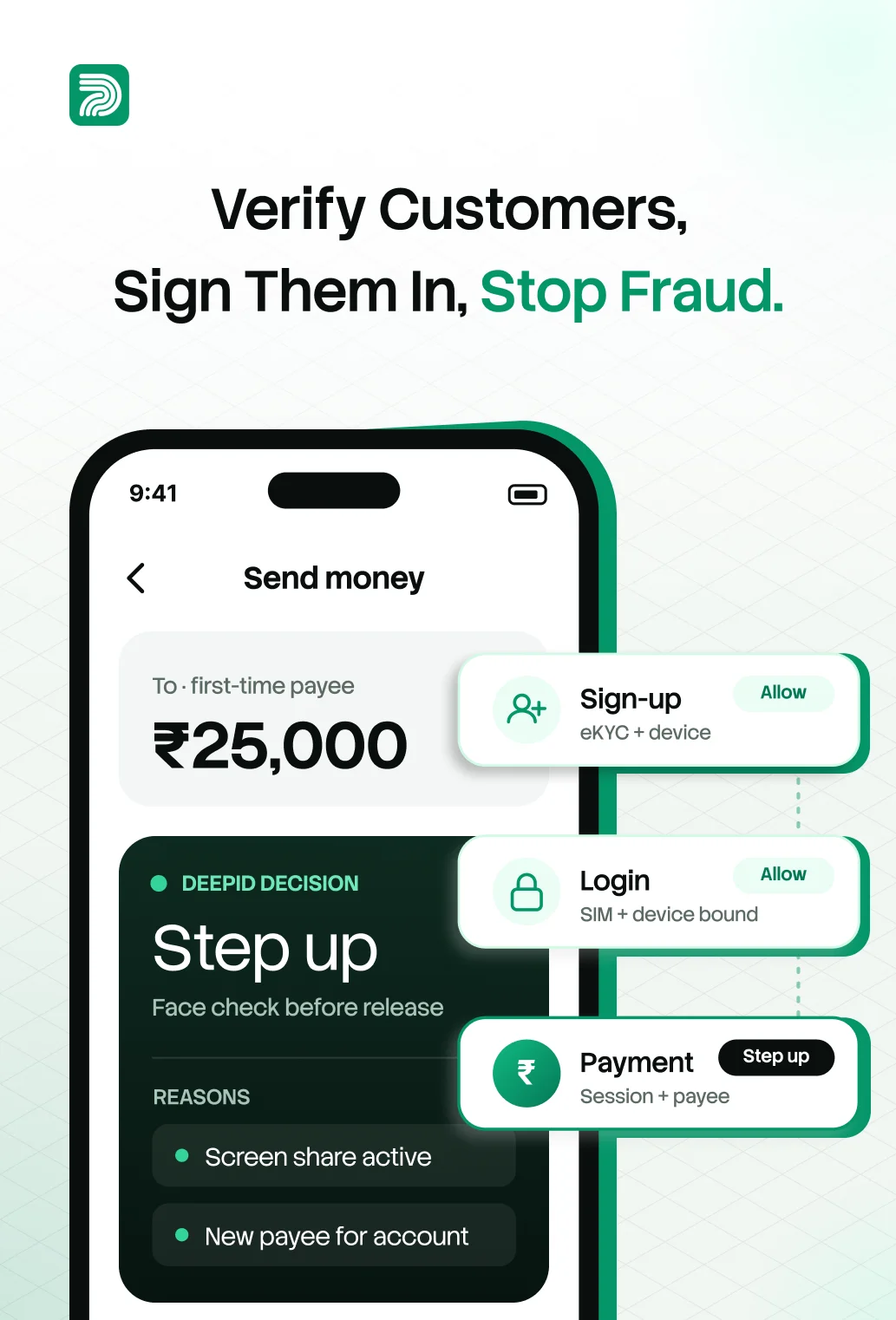
Detect multi-accounting with a persistent device ID
Find the accounts run from the same device to stop bonus abuse, referral fraud and policy evasion, and keep trust high without bothering real users.
What you measure
On your own traffic
- 01Repeat claims prevented
- 02Sign-up conversion
- 03Support tickets
- 04Fraud that follows later
Agreed in writing before the pilot, against what you see today.
Hidden links between accounts, shown.
Accounts linked by device
A device graph shows groups of accounts controlled from the same phone or environment.
Eligibility enforced
The device ID enforces your rules on who can sign up, claim and be paid, and stops repeat sign-ups.
Fewer false positives
Device history tells a real household from a ring, so families aren’t treated as fraud.
What multi-accounting is.
One person running many accounts to get round your rules: offer eligibility, risk limits, content policies or payout limits.
In many businesses it is the root of promo abuse, referral fraud and marketplace manipulation, and it shows up earlier than the fraud that follows.
Promo abuse
Eligibility enforced from sign-up to redemption.
Device intelligence
Emulators and device farms behind scripted multi-accounting.
DeepID identifies a returning device with 97.9% accuracy and returns its decision in under 50 ms (DeepID, 2026). Your own results are measured on your own traffic, in the pilot.
Questions about multi-accounting.
Account clusters, households and enforcing your policy.
How do you tell abuse from a real household?
Households keep stable devices and behaviour. Abuse shows accounts created and dropped quickly, repeated eligibility checks and automation. Device history, read with tiered actions, keeps false positives low.
Where should we check for it?
At sign-up, offer eligibility, redemption, referrals and high-risk payouts.
What is the best way to act on it?
Tiered: warn or step up for a suspicious cluster, block the repeat offender, and keep trusted behaviour low-friction. Don’t block on one weak signal.
Find account clusters at scale.
See device-linked clustering and tiered actions on a demo.