
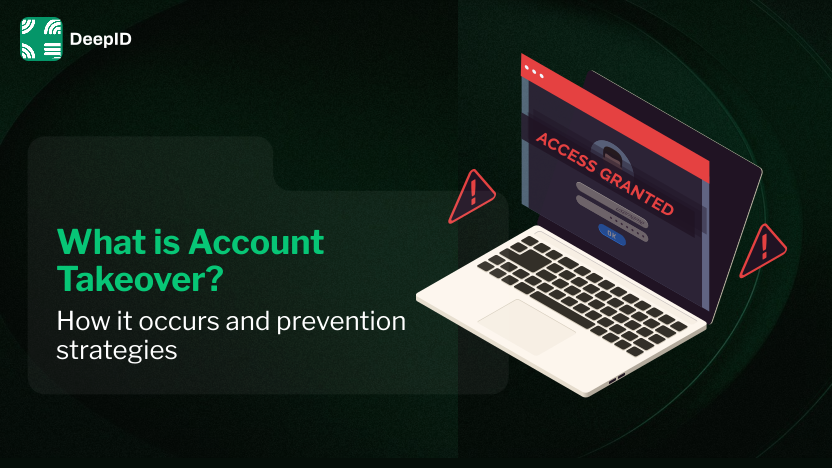
What is Account Takeover? How it occurs and prevention strategies
Vijay Kandari
Digital Marketing Executive
Summarize this article with
Do an exercise: count how many websites and apps you have created accounts on. You will probably find that you have at least 100 accounts that you use for personal, entertainment, transactions, and many other purposes. Now imagine what could happen if someone takes over one of your accounts. That person may steal your money, misuse your personal information, or commit fraud using your identity. This growing risk has become a major concern because account takeover attacks are dangerous for both individuals and businesses.
What is Account Takeover Fraud?
Account Takeover is a type of identity fraud in which an attacker gains unauthorized access to a legitimate user’s online account. The main aim of cybercriminals is to drain funds, personal information, and use accounts to attack other accounts.
How Attackers Take Over Accounts?
Hackers use various methods to take over accounts:
Credential Stuffing: In credential stuffing, cybercriminals use automated bots to test stolen username passwords combination on multiple websites. As users reuse the same password on different platforms, hackers can easily access accounts if one set of credentials is compromised.
Phishing Scams: In phishing scams, cybercriminals send fake emails, messages, or websites that appear legitimate to trick user to share login credentials.
Malware and Keyloggers: Malware infections can secretly collect sensitive information from a user’s device. Some malware records keystrokes, steals saved passwords from browsers, or extracts verification tokens. It allows attackers to hijack accounts without the user’s knowledge.
Exploiting Application Vulnerabilities: Cybercriminals target weak or vulnerable applications connected to organizational systems. Any security flaws in software, APIs, or user authentication mechanisms can provide attackers with unauthorized access to user or administrative accounts.
Session cookies theft: Web browsers store session cookies to keep users logged in to websites. If an attacker steals the cookies via malware, browser vulnerabilities, or insecure networks. It can bypass login credentials and directly hijack an active user session.
Hardcoded Password Exposure: There are some applications that store passwords directly in source code or configuration files for automated access. If any breaches occur, attackers can easily obtain credentials to access sensitive systems and accounts.
Compromised API Keys and Tokens: API keys and verification tokens allow applications to communicate securely with services. When these keys are accidentally shared publicly or leaked through insecure storage, attackers can misuse them to gain unauthorized access to accounts and systems.
What are the signs that Your Account has been hacked?
Whenever your account is hijacked, you will see the following signs:
You cannot log in - Your password does not work, even though you are using the right password.
Unexpected Password Reset Emails - You can reset links you never requested.
Profile Changes: Your name, profile picture, or email address looks different.
Unusual Transaction: Purchase, transfer, or gift card redemptions you can't recognise.
Two-Factor Authentication (2FA) prompts: You get a 2FA code request when you are not logging in.
Sent Message You Did Now Write: You will get to know about the email, message from you, without your notice.
New Devices or apps linked: You can see familiar devices and connected apps in your account settings.
How can a user prevent Account Takeover?
A user can prevent themselves from such fraud:
Enable Multi-Factor Authentication (MFA)
A user should use authenticator apps or hardware security keys to block access. This will prevent unauthorized access even if your password is stolen.
Use a Password Manager
You should use a unique and complex password that is not easy to recognize. Second, the most important thing is to use different passwords for different platforms; don’t use the same password on all the apps or websites you use.
Check for Phishing Red Flags
Do not share your one-time passwords (OTPs) or click on suspicious links from unknown senders.
Monitor Activity
Regularly review your account login history and set up alerts for unrecognized devices or IP addresses.
How can a business prevent this fraud?
A business can prevent a takeover by implementing:
MFA and Strong Passwords: You should mandate the use of strong password policies and MFA for all employees and customers.
Implement Bot Detection and device fingerprinting: You should use web security and device fingerprinting solutions to prevent credential stuffing and brute force attacks.
Use Behavioural Analytics: Integrate a solution to monitor user accounts that detects anomalies such as impossible travel times and uncharacteristic transaction fraud behaviour.
Conclusion
Account takeover is a process of gaining unauthorized access to other accounts. A criminal uses various methods to gain this access, such as credential stuffing, malware, phishing, session hijacking, compromised APIs, etc. A user must be aware of this fraud and about the prevention tips that are mentioned in the above blog post. A business uses a dedicated solution to prevent such fraud.
FAQs
What is the meaning of account takeover?
It is a type of cyberattack in which hackers gain unauthorized access to a user’s online account using stolen credentials, malware, phishing, or other methods.
What is an example of account takeover?
Credential stuffing, phishing, and malware are examples of account takeover.
What is credential stuffing in account takeover attacks?
Credential stuffing is a cyberattack where hackers use stolen usernames and passwords to automatically try logging into multiple accounts
What is the first step in account takeover?
Stealing or obtaining user credentials is the first step ATO.
What is the difference between identity theft and account takeover?
Identity theft means stealing someone's personal identity, where an account takeover user gains access to existing online accounts.
All article tags
Related Articles
September 28, 2026
What is Behavior Analysis and how does it prevent fraud?
September 10, 2026
How to Prevent Password Sharing: A Complete Guide for SaaS & Streaming Platforms
August 31, 2026
How to Prevent Coupon Fraud? Effective Strategies
August 27, 2026
DoT SIM Binding Mandate Explained: Compliance Guide for Communication Apps (2026)
Identify your web and
mobile traffic in minutes
Collect visitor IDs and signals instantly for free,
or reach out to our team for a demo.
250+
countries and territories where we identified devices_
4 Billion +
unique browsers and mobile devices identified_
50 Million +
real-time device intelligence API events per day processed_