
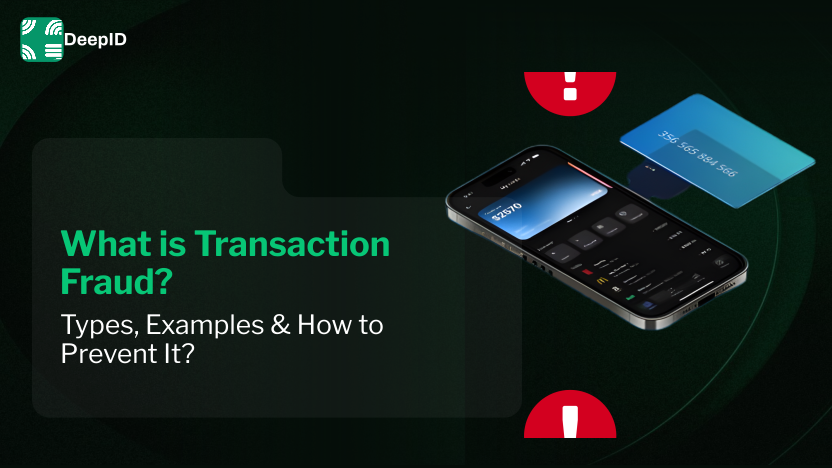
What is Transaction Fraud? Types, Examples & How to Prevent It?
Vijay Kandari
Digital Marketing Executive
Summarize this article with
Transaction fraud occurs when someone makes an unauthorized purchase using your financial data without your authorization, compromising the financial data of millions of people and businesses worldwide. With online payments and banking becoming ubiquitous in modern life, the risk of becoming vulnerable to these sophisticated schemes increases daily - keeping an eye out is no longer optional; staying informed is essential if you wish to safeguard your hard-earned funds and remain financially secure in an ever-evolving digital economy.
What is Transaction Fraud
Transaction fraud is the illegal use of someone else’s credit card, bank account, or payment details. It involves a criminal making unauthorized transactions after stealing financial data.
Common Types of Transaction Fraud
Card Fraud: Fraudulent use of stolen credit or debit card numbers for purchases both online and in person is known as card fraud.
Phishing: Sending fraudulent emails or texts that induce people into divulging their bank login details.
Account Takeover: Criminals gain entry to an individual's account and alter its settings in order to gain full access and steal funds from there.
Friendly Fraud: When customers make legitimate purchases and then later claim they never received it in order to obtain a refund.
How Transaction Fraud Can Happen
Criminals use several methods to steal your data:
Phishing links: Phishing links in messages that lead to websites designed to steal passwords are known as phishing.
Stolen Credentials: Acquiring lists of usernames and passwords stolen in data breaches.
Fake websites: Establishing online stores which appear legitimate but exist solely to collect credit card data.
Malware: Software that tracks your keystrokes to capture banking passwords.
Real-Life Example Of Transaction Fraud:
Recent cases show how dangerous such frauds can be. A victim received a phone call from someone claiming to be from their bank's fraud department using "spoofing" technology that displayed their real phone number on screen.
Scammers convinced their victim that their account was under attack and instructed them to move their money to a "safe account." As this caller had specific personal details and seemed professional, many thousands had already been transferred. This example illustrates that fraud can come not just from technical hacking techniques alone but can involve social engineering tactics to trick people.
How to Detect Fraudulent Transactions
Fraud detection requires looking out for specific warning signals:
Unusual spending patterns: Purchases that are different from typical purchases a user makes.
Rapid transactions: Multiple small purchases made within seconds.
New Location/Device: Logging on from or making purchases from an unfamiliar city/country can be both intimidating and fascinating.
Modern security systems use behavior analysis and anomaly detection technology to monitor these movements automatically and identify any abnormal movements that might arise.
Bank Transaction Fraud Detection
Banks use advanced technology to stop theft before it happens. This process is called transaction monitoring.
Real-time monitoring: Real-time monitoring systems scan every payment instantly for any signs of fraudulent activity, while keeping an eye out for suspicious patterns or signs.
Artificial Intelligence/ML models: AI/ML models learn user's spending patterns and identify any unusual transactions that may arise.
Pattern Analysis: Banks use pattern recognition software to examine transactions against known fraud tactics in order to detect high-risk payments and block them.
How to Detect Fraud in Online Transactions
Users and businesses can take these simple actions to detect fraud transactions:
Read all SMS or email notifications following an online purchase carefully to remain aware of possible fraudulent charges.
Only shop from websites with a padlock icon and clear return policies.
Implement Two-Factor Authentication to secure every login with a code sent from your phone.
Review your bank statements regularly to identify any unexpected charges that may have appeared, as they could indicate possible theft or fraud.
Fraud Transaction Complaint: Steps
If you notice a suspicious charge, follow these steps immediately:
Report to your bank: Call the number on the back of your card to report the fraud.
Block the account: Ask the bank to freeze your card or account to stop more charges.
File a complaint: Submit a formal "fraud transaction complaint" through the bank’s official portal.
Track the status: Keep your reference number and follow up until the money is recovered.
Transaction Fraud Prevention Tips
Never share your OTP (One-Time Password) with anyone.
Avoid using public Wi-Fi for banking or shopping.
Enable push notifications for all account activity.
Always verify the URL of a website before entering payment details.
Conclusion
Transaction fraud is a big threat in today's digital economy, but with proper vigilance you can prevent transaction fraud before it even happens. Protecting your finances relies on both advanced bank technology and your own attention to account activity - by tracking statements regularly and acting quickly when something suspicious arises, criminals can be stopped before any lasting damage is done to accounts. Staying aware of fraud techniques is your best defense - banks should never ask for passwords or OTPs over the phone! By remaining cautious and reporting issues promptly through appropriate channels, digital banking experience remains safe and secure!
FAQs
Ques: What is transaction fraud?
Ans: Transaction fraud, refers to unauthorized use of someone’s financial information to make transactions using their cards, bank accounts.
Ques: How is financial information stolen?
Ans: Cybercriminals steal financial information by phishing, by creating fake websites, by using malware to store your passwords, and by taking advantage of data-breaches.
Ques: What is friendly fraud?
Ans: Friendly fraud refers to a type of transaction fraud where the user makes a legitimate payment but reports it as a fraud payment.
Ques: Why is Two-Factor Authentication (2FA) important?
Ans: 2FA adds an extra layer of protection for users to protect their personal and financial information and makes sure that a fraudster isn’t able to access your account even if they are able to get your password.
Ques: Is it safe to use public wifi for banking?
Ans: No, it is strictly advised not to use public wifi for banking purposes as it creates an easy gateway for fraudsters to get your information.
All article tags
Related Articles
September 28, 2026
What is Behavior Analysis and how does it prevent fraud?
September 10, 2026
How to Prevent Password Sharing: A Complete Guide for SaaS & Streaming Platforms
August 31, 2026
How to Prevent Coupon Fraud? Effective Strategies
August 27, 2026
DoT SIM Binding Mandate Explained: Compliance Guide for Communication Apps (2026)
Identify your web and
mobile traffic in minutes
Collect visitor IDs and signals instantly for free,
or reach out to our team for a demo.
250+
countries and territories where we identified devices_
4 Billion +
unique browsers and mobile devices identified_
50 Million +
real-time device intelligence API events per day processed_