
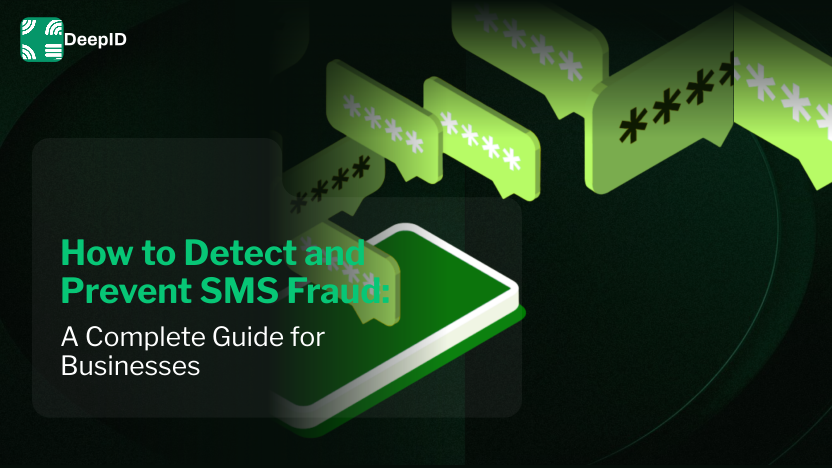
How to Detect and Prevent SMS Fraud: A Complete Guide for Businesses
Vijay Kandari
Digital Marketing Executive
Summarize this article with
According to Juniper Research, messaging fraud will reach $71 billion in 2026. Compared to the $80 billion loss in 2025, this represents a decline. However, this is still a huge loss. The main reasons behind these losses are smishing, SMS fraud, and account takeover. To prevent this fraud, businesses need to take proactive measures. Here, in this blog, you will learn about SMS fraud, its types, detection methods, and how to prevent it.
What is SMS Fraud?
SMS Fraud is a type of scam where fraudsters use text messages (SMS) to trick people into sharing sensitive information, clicking on malicious links, making payments, or downloading harmful apps.
What are the types of SMS Fraud?
A fraudster uses various methods to commit SMS fraud, such as:
SMS Pumping Fraud (Artificially Inflated Traffic / AIT)
SMS pumping is also called Artificially Inflated Traffic (AIT), SMS toll fraud, or International Revenue Share Fraud (IRSF). make it appear as if trusted organizations sent it to businesses that use SMS at scale in 2026. Unlike smishing, which targets consumers, SMS pumping targets the business.
Smishing
Smishing is a type of fraud where scammers send fake text messages to trick people into sharing personal information, banking details, passwords, or OTPs.
SMS Spoofing
SMS spoofing is another type of SMS fraud. In this fraud, a fraudster disguises the sender ID of a text message to make it appear as if trusted organizations sent it. Scammers make their messages appear as though they come from trusted organizations such as banks, government departments, courier services, or popular brands
SMS Swapping
To receive SMS, a fraudster needs access to your SIM Card. To receive SMS, a fraudster needs access to your SIM Card. In this case of fraud, the scammer uses various tactics to transfer your mobile number to a new SIM card they control.
SMS Trashing
SMS Trashing is a type of telecom fraud where text messages that should reach users are intentionally blocked or not delivered. It occurs during the application-to-person (A2P) messaging ecosystem used for OTPs, banking alerts, notifications, and marketing messages.
Grey Routes and SIM Boxes
Grey routes and SIM boxes are common methods used to bypass official telecom channels and reduce messaging costs. Grey routes send business messages from a local network instead of using genuine routes. Where a SIM box is a device that holds multiple SIM cards and converts bulk business SMS traffic into regular person-to-person messages.
It allows fraudsters to avoid telecom fees. While these methods may appear cheaper, they are often used for SMS fraud, such as message interception, SMS trashing, and fake delivery reports.
How to detect SMS Fraud?
These are the common signs that usually indicate SMS fraud:
Suspicious Links
Fraudster messages usually contain shortened or unfamiliar URLs. It is designed to redirect users to fake websites.
Urgent or Threatening Language
The scammer creates panic, so the victim takes quick action. The common phrases used are
The account will be blocked today
Immediate verification required
Payment failed
Claim your reward now
KYC has expired
Requests for Sensitive Information
Banks, financial institutions, and government agencies do not ask for:
OTPs
Passwords
PINs
CVV Numbers
Aadhaar details through SMS
Sender ID Spoofing
fraudsters manipulate sender IDs and look like a brand. The messages appear as though they come from a trusted brand.
Detection methods include:
Verifying registered sender IDs
Monitoring message origin and routing patterns
Checking telecom records
Unusual Message Patterns
High volumes of similar messages are sent in a very short period of time. It creates urgency, which somehow indicates signs of fraud.
It is detectable if an organisation closely monitors:
Message frequency
Geographic distribution
Delivery Anomalies
Failed delivery rates
Advanced SMS Fraud Detection Techniques
AI Machine Learning Analysis
Currently, AI has become smart enough to analyse and detect message content, URL reputation, Historical fraud patterns, sender behaviour, and user interaction patterns.
AI models can easily identify suspicious messages before they reach customers.
URL Reputation Checks
Other methods is verification of URL against the database to identify:
Phishing Websites
Malware hosting domains
Newly registered domain
Previously reported fraudulent URLs
Device and Behavioural Intelligence
Fraud detection platforms can evaluate:
Device fingerprinting
SIM swap activity
Unusual login behaviour
Location inconsistencies
Telecom Network Monitoring
The telecom network monitoring easily identifies artificially inflated traffic, SMS pumping attacks, international routing manipulation, and premium rate fraud schemes.
How can businesses prevent SMS Fraud?
A business can integrate several methods to prevent SMS:
Use Phone Number Verification
Verify mobile numbers during registration to confirm that users are genuine and reachable.
Use Multi-Factor Authentication
Multi-factor authentication adds an extra layer of security by combining OTPs, biometrics, authenticator apps, or passwords.
Rate Limiting on OTP Requests
Restrict the number of OTP requests and verification attempts to prevent abuse and automated attacks.
Use CAPTCHA and Bot Detection
It blocks bots from triggering bulk OTP requests through CAPTCHA challenges and behavioural analysis.
Restrict High-Risk Locations When Needed
Identify and limit transactions originating from regions from manually high fraud activity.
Track SMS Delivery and Conversion Rates
Monitoring delivery reports, OTP success rates, and verification completion rates to identify anomalies.
Use AI Powered Fraud Detection
Use machine learning models to analyze user behaviour, detect patterns, and identify fraudulent activities in real time.
How DeepID Helps Prevent SMS Fraud?
DeepID helps businesses detect and prevent SMS fraud by analyzing phone number intelligence, device signals, SIM swap activity, and user behavior before OTPs are sent. It identifies high-risk numbers, suspicious devices, bot-driven OTP requests, and potential account takeover attempts in real time.
On combining risk scoring with fraud detection insights, DeepID allows businesses to block fraudulent users, reduce SMS pumping attacks, OTP abuse, and protect customer accounts.
FAQs
What is SMS Fraud?
SMS fraud includes all the activities that help fraudsters steal personal information, drain financial accounts, and exploit telecommunications systems. It targets both individuals, consumers, and businesses.
How to check fraud SMS?
Many warning signs help in identification:
Message containing suspicious or shortened links
Requests for passwords, OTPs, PINs, or banking information
Urgent language such as “Account will be blocked today” or immediate action required
How to stop SMS Fraud?
A business can use various techniques to stop SMS Fraud:
Verify phone numbers before onboarding users
Enable Multi-Factor Authentication (MFA)
Detect SIM Swap events before high-risk transactions
Apply rate limits to OTP requests
Use CAPTCHA and bot detection tools
What are the types of SMS fraud?
Smishing
SMS Spoofing
SIM Swapping
SMS Pumping (AIT Fraud)
SMS Trashing
Grey Route and SIM Box Fraud
How to detect SMS Fraud?
A business can detect SMS fraud through various means:
Sudden increase in OTP requests
Multiple requests from the same device or IP address
Traffic arriving from unusual countries or telecom operators
SIM Swap activities
Device intelligence
SIM Binding
All article tags
Related Articles
September 28, 2026
What is Behavior Analysis and how does it prevent fraud?

September 10, 2026
How to Prevent Password Sharing: A Complete Guide for SaaS & Streaming Platforms
August 31, 2026
How to Prevent Coupon Fraud? Effective Strategies
August 27, 2026
DoT SIM Binding Mandate Explained: Compliance Guide for Communication Apps (2026)
Identify your web and
mobile traffic in minutes
Collect visitor IDs and signals instantly for free,
or reach out to our team for a demo.
250+
countries and territories where we identified devices_
4 Billion +
unique browsers and mobile devices identified_
50 Million +
real-time device intelligence API events per day processed_