
SIM swap fraud: detection strategies for fintech and wallets

Deepak Raj
VP Tech
Summarize this article with
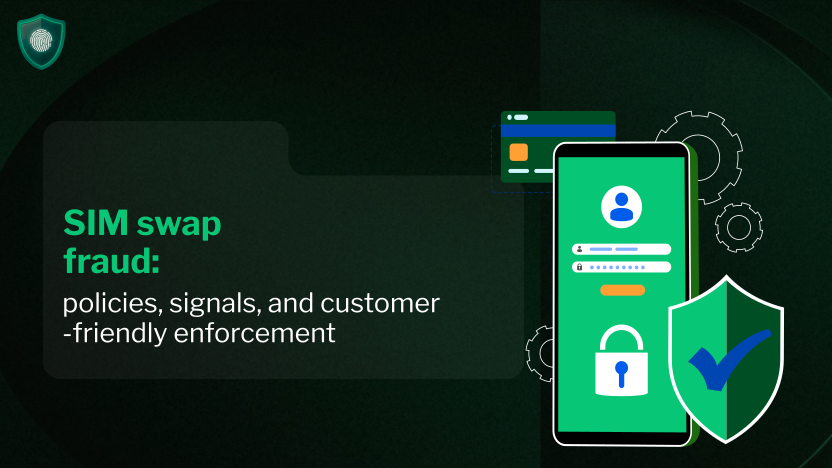
SIM Swap fraud an increasing danger that could be a way to bypass traditional security measures like SMS-based two-factor authentication. For digital and fintech businesses not being able to spot the presence of a SIM swap can lead to complete account takeover (ATO) and substantial financial losses.
What is SIM Swap Fraud?
SIM swap fraud happens when a criminal bribes the mobile operator to change the victim's phone number the new SIM card that they control. When the swap is completed the perpetrator is then able to access all texts and calls that are intended for the victim.
How it Works Step-by-Step:
The attacker obtains personal information regarding the victim (name address, address, and SSN) via phishing attacks or leaks of data.
The attacker calls the mobile service provider pretending to be the victim and claims that their phone is damaged or lost.
The phone carrier transfers the numbers to an victim's SIM card.
The attacker exploits to use the "Forgot Password" feature on applications for crypto or banking. They steal an SMS One-Time Password (OTP) to reset the credentials and then drain the account.
Why SIM Swap is Hard to Detect
Most fraud detection systems have difficulty with SIM swaps due to the fact that the transaction takes place "off-platform."
Appear to be authentic: To your application the user has provided the correct phone number as well as the correct OTP for SMS.
Outside the Application: main fraud is at the level of telecom which the majority of businesses do not detect.
Dependency on Telecoms: Many businesses depend on the phone number as a permanent identification mark however, numbers can be readily re-assigned.
Impact on Businesses
SIM Swap is not just a problem for the customer; it's a huge threat for the business as well.
Account Takeover (ATO): Criminals are granted complete control over sensitive users' information as well as funds.
Financial Loss: Businesses often have to pay high charges for legal fees, chargebacks, as well as reimbursement demands.
User Trust: When a user's account has been emptied, their faith in the security of your platform is broken for good forever
SIM Swap Detection Strategy: The Playbook
To stop this fraud, teams need a layered detection strategy that goes beyond the phone number.
Step 1: Monitor SIM Change Signals
The easiest way to determine if a swap has occurred is to examine the most recent "SIM Age" or "IMSI" (International Mobile Subscriber Identity) modifications. If you find that a SIM card was switched within the last 24 to 48 hours, any transaction that is high-value must be flagged as high-risk.
Step 2: Analyze Device Signals
A SIM swap typically requires an entirely new device. It is important to examine the current signature with the historical signature of the user's "Known Devices."
Do you think this is a brand-new device ID?
Does the hardware of the device match the login session you have previously used?
Step 3: Track Behavioral Changes
Fraudsters behave differently from legitimate users. Watch out to find "Gold Rush" patterns:
Change your password immediately, then an enormous withdrawal.
Logins using strange IP addresses or geolocations within a few hours of the SIM change.
Changes to email addresses of contact or the numbers for recovery.
Step 4: Apply Risk-Based Authentication
Do not treat every user with the same treatment. Make use of "Step-up" authentication for risky actions. In the event that your security system detects an unrecent SIM change, you must conduct the use of biometrics (Face ID) or an electronic security key rather than an OTP SMS.
Limitations of Traditional Detection
Many systems that are old fail because they are based on outdated techniques.
OTP Reliance Security Reliance on OTP: If all you have comes from an SMS number, you're in fact helping the fraudster because they own the code's destination.
Phone Numbers as Id: The idea of treating a phone number as a "fixed" ID is dangerous. Numbers are repurposed and exchanged often.
The absence of real-time signals: A lot of teams check for fraud after the cash has been taken away, rather than verifying the status of the SIM when they log in.
Modern Approach to SIM Swap Prevention
Fraud teams are moving towards Device Intelligence. This involves combining information from telecoms with the use of hardware and behavioral biometrics. By creating an individual "Trust Score" for every session, you will be able to stop the attacker prior to them even login to the account.
How DeepID Helps
DeepID offers the necessary infrastructure to convert "invisible" telecom fraud into tangible, actionable information. Our platform can be integrated directly into your process to spot SIM-related anomalies in real time.
Recognize suspicious device changes: DeepID identifies when a fingerprint on a device shifts even though they've got the right credentials.
Monitoring the risky behavior: We look for cross-platform patterns to identify "Account Takeover" signatures before they grow.
SIM-Related Anomalies: Through analyzing the connection between the mobile device and system, DeepID flags recent SIM swaps that conventional tools do not detect.
The outcome: Your team will have greater detection accuracy, fewer reviewers, as well as a dramatic decrease in the number of successful takeovers.
Best Practices for Fraud Teams
Moving towards Authenticator applications or Biometrics for password transfers and resets.
Integrate an API that verifies the validity that is on the SIM card prior to sending sensitive OTPs.
Encourage users to set "Port-Out Pins" with their mobile phones to avoid unauthorised swaps.
Stop fraudsters from "testing" multiple accounts from the same IP or device.
Do not rely solely on one signal. Combining the device ID, network information and the behavior.
Conclusion
In order to detect SIM swap fraud demands getting rid of an "phone number equals identity" mentality. If you implement a layering strategy that tracks SIM changes as well as device integrity and behavior patterns, you will be able to ensure the safety of your customers as well as increase your profits. An active, data-driven strategy will allow you to remain ahead of the latest frauds in telecom.
All article tags
Related Articles
September 28, 2026
What is Behavior Analysis and how does it prevent fraud?

September 10, 2026
How to Prevent Password Sharing: A Complete Guide for SaaS & Streaming Platforms
August 31, 2026
How to Prevent Coupon Fraud? Effective Strategies
August 27, 2026
DoT SIM Binding Mandate Explained: Compliance Guide for Communication Apps (2026)
Identify your web and
mobile traffic in minutes
Collect visitor IDs and signals instantly for free,
or reach out to our team for a demo.
250+
countries and territories where we identified devices_
4 Billion +
unique browsers and mobile devices identified_
50 Million +
real-time device intelligence API events per day processed_