
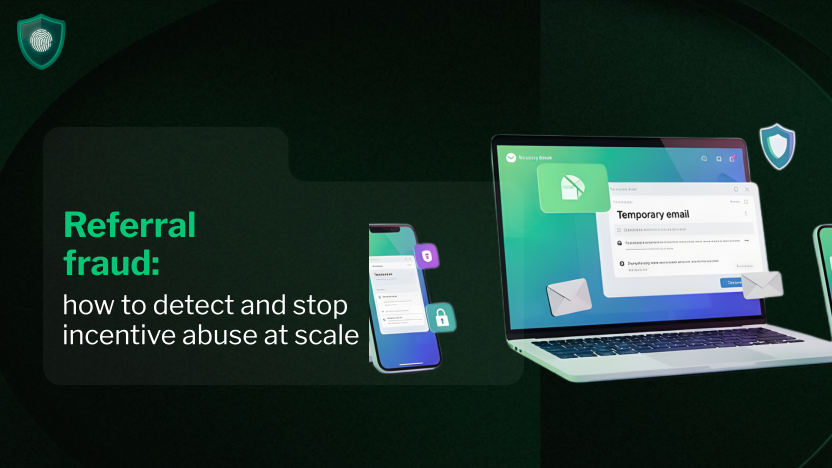
Referral fraud: how to detect and stop incentive abuse at scale

Deepak Raj
VP Tech
Summarize this article with
Referral programs can be a powerful tool for modern-day growth. In remunerating users who already have friends, businesses can cut their costs of acquisition and develop an enduring community. If there's an incentive to pay and a financial incentive, it's almost always an espionage ring seeking an opening. If you don't have the proper controls the "viral growth" might actually be an influx of fraud that drains your money and alters your information.
What is Referral Fraud?
Referral fraud is when people or groups of people exploit the referral program to earn reward money in deceit. In lieu of getting real prospective customers, fraudsters resort to different strategies to imitate natural growth.
This is because referral rewards like credits, cash or discounts "liquid gold" for abusers. If the entry requirement is minimal (such as requiring just the email address) the incentive to cheat increases.
Common Types of Referral Abuse
Understanding the problem is the first step towards prevention. Below are the top frequent ways that people play the system:
Self-Referrals: The user sets up an additional account by using their referral link in order to receive both "inviter" and "invitee" rewards.
Multi-Account Creation: The fraudsters employ automated scripts, also known as "botnets" to create hundreds of fake accounts. They cycle through referral codes in order to earn reward points at a large and enormous scale.
Fake identities: Making use of fake email accounts (burner email) (also known as "SIM farms" to bypass the basic verification procedures.
Incentive Farming: Professional scammers post referral codes to "couponing" sites or forums that encourage users with low quality or bots to sign up to receive a payout.
Why Referral Fraud is Hard to Detect
Referral abuse is notoriously hard to detect because it's created to appear as "good" user behavior.
At first glance, a rise in sign-ups seems like the result of a successful campaign.
With the help of basic automation tools one person can create thousands of fake referrals within only a few seconds.
Many businesses only look the email address for any duplicates. The fraudsters are able to bypass this with the use of Gmail "plus" addressing (e.g., abhishekkumar@surepass.io) or various domains.
The True Impact on Your Business
The financial cost of referral fraud is far greater than the loss of incentive funds. It can harm your business in three ways.
Revenue loss: You're taking on "customers" who will never ever actually buy anything or even use your product.
Incorrect growth metrics: The team of marketers might believe that a particular campaign is working and you decide to increase your efforts on an area that's packed with bots.
Ineffective Campaigns Fraudulent activity consumes the funds intended for real users, making your campaign less rewarding for your true supporters.
How to Prevent Referral Fraud: The Core Controls
To stop referral misuse you must go beyond the simple check of email. The following are effective technological security measures:
Device Fingerprinting
Each device has its own unique "signature" based on its hardware and software configurations. By keeping track of device IDs, you can determine if more than ten "users" are all signing on the same laptop or phone.
Behavioral Analysis
Real users take the time to investigate the application. The majority of fraudsters follow an "golden path"--they click on the referral link, sign-up and then claim the reward as quickly as they can. The tracking of time-to-action could aid in identifying suspicious behaviour.
Network & IP Checks
If 500 referrals originate via the exact IP, or a recognized Data Center (VPN) this is an indication of a red flag. But, as the majority of users share IP addresses (like in a cafe) it is important to be paired with other information factors.
Risk Scoring
Instead of simply "yes" or "no," make use of an assessment of risk. If a user is using an unusual device, new IP, or has an email with a burner address scores increase which triggers a manual check or an additional confirmation step.
How DeepID Protects Your Growth
Conventional fraud solutions are typically too bulky or slow for growing teams that are fast-paced. DeepID was created to bridge the gap, offering an SDK designed for developers that blocks referral fraud in real time.
DeepID assists you in regaining control by paying attention to:
Multi-Account Detection: We dig deeply into the signals of devices to identify related accounts even if a user deletes their cookies or is using the VPN.
Suggestive Pattern Recognition: It detects "burst" attacks and automated scripts before they deplete your promotional budget.
Device-level Intelligence: We offer an "source of truth" for every user, ensuring that each device is equal to one user.
With the integration of DeepID, growth teams are able to concentrate on sizing their campaigns in confidence, being confident that their investment is secured through enterprise-grade fraud protection.
Best Practices for Referral Programs
Reward delay: Don't distribute the prize at the time of signing-up. Make sure to wait until the first user purchases a product or reaches a particular milestone.
Utilize "Invite-Only" Periods: For new launches Limit referrals only to the most loyal, long-term users first.
Be Watchful of Your "Whales": If one user is responsible for 90 percent of your referrals examine their actions manually.
Conclusion
Referral programs are designed to reward your customers and not support fraudsters. Moving away from simple filtering of emails to sophisticated devices and behavioral analysis to protect your margins, and ensure that the growth metrics you use are legitimate. A proactive approach to fraud prevention isn't only about saving money. It's about establishing a an efficient and sustainable foundation for your company.
All article tags
Related Articles
September 28, 2026
What is Behavior Analysis and how does it prevent fraud?

September 10, 2026
How to Prevent Password Sharing: A Complete Guide for SaaS & Streaming Platforms
August 31, 2026
How to Prevent Coupon Fraud? Effective Strategies
August 27, 2026
DoT SIM Binding Mandate Explained: Compliance Guide for Communication Apps (2026)
Identify your web and
mobile traffic in minutes
Collect visitor IDs and signals instantly for free,
or reach out to our team for a demo.
250+
countries and territories where we identified devices_
4 Billion +
unique browsers and mobile devices identified_
50 Million +
real-time device intelligence API events per day processed_