
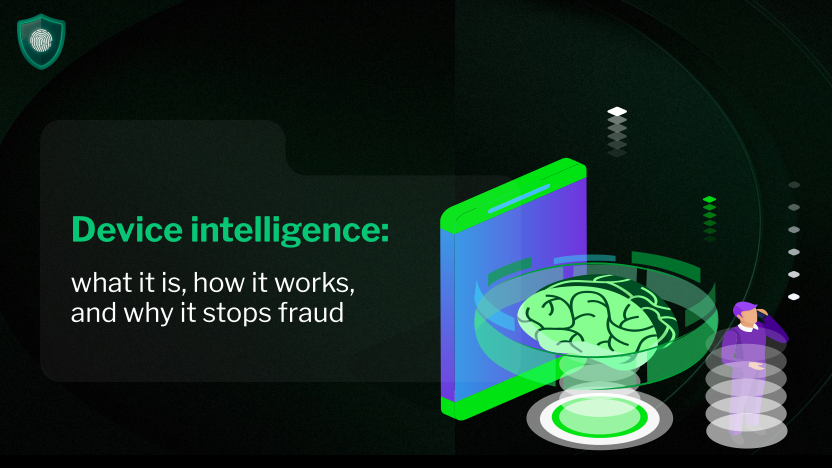
Device intelligence: what it is, how it works, and why it stops fraud

Deepak Raj
VP Tech
Summarize this article with
It is the act of acquiring and analyzing the data on devices used by users to verify its authenticity and determine the level of risk. It's the invisible mechanism behind modern fraud prevention. It helps businesses differentiate between legitimate clients and sophisticated criminals in milliseconds.
In a world where fraud and identity theft attacks are on a record increase, knowing what "what" and "how" of the device that is behind the screen is not necessary. It's a requirement for business.
What is Device Intelligence?
At its simplest it can be described as an aspect of the "digital DNA" of a smartphone or tablet. Like a detective employs fingerprints to identify someone at the scene of a crime Digital systems use device intelligence to determine the particular hardware and software that is accessed by the website or application.
It goes beyond being aware that someone has the "iPhone." It analyzes numerous tiny details like the battery level, screen resolution and operating system versions -- to make a distinct profile. The profile can help businesses determine the likelihood that a device has been previously used to commit fraud or if it's trying to be something that it's not.
Why Device Intelligence is Important
The digital landscape has evolved. Traditional security techniques, like passwords, or even two-factor authentication (2FA) do not suffice to deter modern-day fraudsters.
The Rise of Sophisticated Fraud
Today, fraudsters employ automation as well as "device farms" to simulate thousands of users. They make use of tools to conceal their identity, which makes it almost impossible to identify them with simple guidelines.
Limitations of Traditional Identity
relying on email addresses or phone number is a risk. The databases that contain "leaked" credentials are sold on the dark internet daily. If a thief has access to your password and mobile phone (through SIM swapping), conventional security assumes that they're you.
The Need for Better Signals
Device intelligence offers an additional layer of security that the user does not have to "do" anything to trigger. It's done within the background and provides high-quality signals that are more difficult to steal than passwords.
How Device Intelligence Works
Device intelligence isn't dependent on a single piece information. Instead, it blends different layers of data to create a comprehensive view of the risk.
Device Fingerprinting
This is the base. It requires capturing an "snapshot" of the device's characteristics. This includes the hardware's specs along with browser settings and the software version. When they are combined, these characteristics give a unique ID which remains even after the user deletes cookies or switches to private browsers.
Behavioral Signals
This layer analyzes what the gadget is utilized. Are users using the device at a normal speed, or copying and pasting data into forms in a flash? Does the mouse move in natural curves or straight lines? Behavior signals can be used to determine bots and automated scripts.
Network Signals
What is the location that the device is connecting to? Device intelligence will determine whether the user uses the services of a VPN or proxy or using a Tor browser to conceal their location. It also analyzes the "reputation" of the IP address to determine whether it's been linked to attacks previously.
Risk Scoring
Then, all of the signals are fed to an engine that generates the risk score. A score of low means that the device appears safe; an increase in score means the session is unsafe and should be shut down or require additional confirmation.
Types of Device Signals: A Deep Dive
To truly understand a device, we must look at four primary categories of signals.
Hardware Signals
These are the physical properties of the device. Examples include:
- Size and direction of screen
- The health of the battery and status of charging
- Information on CPU and GPU
- Model of device and manufacturer
Software Signals
These are the digital environments. Examples include:
- Operating system version (e.g., iOS 17.4)
- Version and type of browser (e.g. Chrome 122)
- Languages of the system and time zones
- Fonts and plugins installed
Network Signals
They describe the relationship. Examples include:
- IP Address The address that is digital for the connection.
- ISP: The provider of the internet.
- Connection Type is: Is it home Wi-Fi network, a cellular 5G wireless network or data center?
Behavioral Signals
They describe the interactions. Examples include:
- Keystroke Dynamics Typing rhythm.
- Touch Events: What happens when the user taps or swipes on the screen of a mobile device.
- Device Motion: Utilizing the accelerometer to determine whether the device is held by a person or seated in a rack.
Key Use Cases of Device Intelligence
The device intelligence can be used in a variety of ways. It safeguards the entire user experience, starting from the moment an app is first opened until the moment when a transaction has been completed.
Fraud Prevention
By the detection of "high-risk" devices, businesses can block fraud before it happens. If a single device attempts to make use of ten credit cards within an hour, the device's intelligence will immediately alert you.
Account Protection (ATO)
The Account Takeover (ATO) is when a criminal takes over the user's login. Even if the attacker has the correct password, device intelligence can be able to detect that the user's login is from an "new" device with a suspicious profile, which triggers an additional security check.
Bot Detection
Bots are utilized to gather data, keep stocks (like the tickets to concerts) and even generate fake user accounts. It is possible to differentiate between a computer-operated web browser and a headless program that is designed to resemble the behavior of a human.
Growth Optimization
Security is not all about blocking. If you know that a device is "trusted," you can reduce friction for trustworthy users. For instance, you could let a trusted user skip the login process which can result in more conversions and an improved user experience.
Limitations of Traditional Approaches
A lot of companies still rely on outdated technology that fraudsters already know to avoid.
OTP Reliance
One-time Passwords (OTPs) delivered via SMS are susceptible for SIM switching and social engineering. Using only OTPs to create an "security theater" that annoys users, but does not provide complete security.
IP Tracking
IP addresses change frequently. Users could be connected to home Wi-Fi in the early morning and at a coffee shop at lunchtime. Additionally, scammers can move through a variety of residential IPs in order to conceal their track records.
Static Rules
The old systems used "if/then" logic, such as "If the IP is from Country X, block it." The modern fraud process is much more complex. Rules that are static can result in "false positives," where clients who are trustworthy are denied access due to the fact that they are travelling or using VPNs. VPN.
The Modern Fraud Detection Stack
The most effective defense isn't one wall, but a layered strategy. A modern stack is composed of three key elements:
1. High-Fidelity Collection: Utilizing the SDK (Software Development Kit) to collect deep signals from devices that aren't accessible through a standard web browser.
2. Real-Time Processing: Processing data in milliseconds, so that users don't feel a delay.
3. Machine learning adapts to new patterns of fraud when they are discovered instead of waiting for humans to change the rule.
How DeepID Helps
DeepID is designed to give the most precise information about your device currently available. While other tools can provide generic information, DeepID focuses on actionable signals that impact you bottom line.
High-Quality Device Intelligence
Our SDK is a deep-level collection of hardware and software characteristics which are extremely difficult for fraudsters and scammers to replicate. We offer a permanent "Device ID" that recognizes returning users, even if they try to conceal their identity.
Actionable Fraud Signals
We don't only provide you with raw data. We provide you with insights. DeepID recognizes signs like the tampering of apps, emulators and location spoofing, which are the specific tools employed for professional fraudsters.
Real-Time Risk Insights
DeepID is a real-time application. This means your fraud team gets a risk score instantly, allowing you to automate the "Approve/Review/Decline" process.
Outcomes That Matter
- More Effective Fraud Prevention: Deter other criminals from getting the truth behind their masks.
- Reduced False Positives Block your top customers by precisely identifying their devices that they trust.
- Improved User Experience: Eliminate the frequency of irritating 2FA and captchas for your most loyal customers.
Best Practices for Using Device Intelligence
Implementing device intelligence is a journey. Here are five ways to ensure you get the most value:
- Integrate Early: Do not wait until to see the payment page. Make use of device intelligence during the login and registration stages to spot fraud right at the door of the store.
- Link Your Data Connect Your Data: Use the Device ID to link accounts. If five accounts have the same suspicious device, they're likely to be part of a ring of fraud.
- Watch for emulators: Professional scammers frequently employ applications (emulators) to appear as if they're using the phone or a mobile. Always check for signals that signal the presence of a virtual world.
- Balance Friction: Utilize high-risk scores to initiate "step-up" authentication (like a face scan) however, let low risk users use the app with ease.
- Stay up-to-date: Fraudsters change. Make sure your service provider for device intelligence is continuously changing their detection algorithms to stay on top of the latest techniques for spoofing.
Conclusion
Device intelligence is the core of a safe modern, digitally-based business. By identifying the distinct nature and behavior of every device that comes into contact with your system, you will be able to safeguard your profits and your reputation at the same time.
As the world of digital technology grows more complicated and complex, the ability to differentiate between a trusted friend and adversary in real time is the greatest competitive advantage. DeepID will aid you in turning the data on your device into the most secure security asset.
All article tags
Related Articles
September 28, 2026
What is Behavior Analysis and how does it prevent fraud?

September 10, 2026
How to Prevent Password Sharing: A Complete Guide for SaaS & Streaming Platforms
August 31, 2026
How to Prevent Coupon Fraud? Effective Strategies
August 27, 2026
DoT SIM Binding Mandate Explained: Compliance Guide for Communication Apps (2026)
Identify your web and
mobile traffic in minutes
Collect visitor IDs and signals instantly for free,
or reach out to our team for a demo.
250+
countries and territories where we identified devices_
4 Billion +
unique browsers and mobile devices identified_
50 Million +
real-time device intelligence API events per day processed_