
App Cloning Explained: Risks, Detection & Prevention for Businesses
Vijay Kandari
Digital Marketing Executive
Summarize this article with
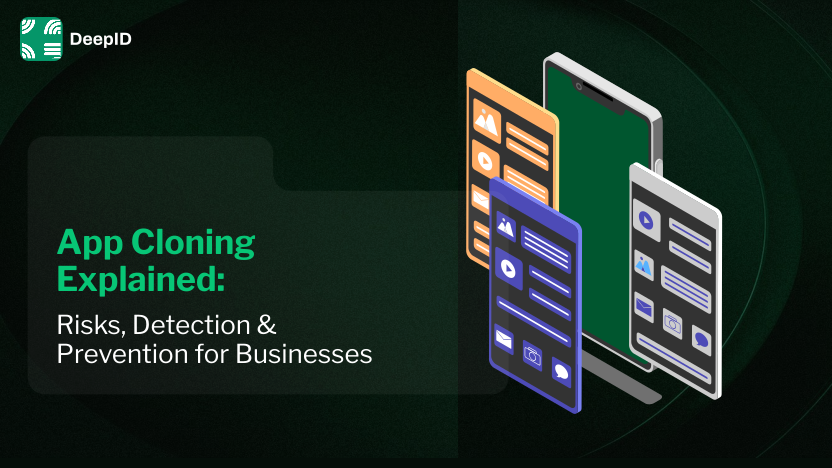
In the fast-paced world of mobile technology, app cloning has emerged as a significant trend, especially for B2B SaaS companies and developers. It enables users to manage several accounts on the same platform. For app developers, it poses a huge security threat. App cloning allows users to create separate as well as duplicate app environments on a single device. For businesses, recognizing the risk of app cloning for fraud and security purposes is key to saving revenue, platform integrity, and the safety of their users.
What is App Cloning?
App Cloning is the process of creating a functional copy of a mobile application on the same device. This "clone" acts as a completely separate app from the original.
How it Works
Imagine a phone that uses two SIM cards. Each SIM has its own number, contact list, messages, etc. but everything else is shared. App cloning allows you to do something similar. Each cloned app is treated independently, so you could have a completely different account, data, and settings for that version.
This is usually done in three ways:
Cloning apps: Third-party applications such as "Parallel Space" or "Dual Space" create an environment in your phone in which the app that is cloned lives.
OS-Level Features: A lot of Android makers (like Samsung or Xiaomi) create "Dual Apps" or "App Twin" features directly into the settings.
Modified APKs: Users who are more advanced may make an "modded" version of an application file and install it along with the original.
Legitimate vs. Malicious App Cloning
App cloning is not always done with a bad intention. In fact, it has many legitimate use cases:
Legitimate Use Cases
Multiple Accounts: One user may have two WhatsApp accounts, one to use for business and one for family. Cloning allows them to remain connected to both accounts without switching between them.
Privacy: Some users may utilize a cloned copy of the social media application to keep their private and public identities separate.
Testing: Developers frequently make use of clones in order to determine how their app performs under different user profiles.
The Misuse
The issues with app cloning begin with the intent to harm someone. Since app cloning creates a `fresh` environment, it can deceive an app into believing it is being launched on a completely new device for the very first time. This is the point where app cloning fraud starts.
App Cloning Fraud: Why It’s a Business Nightmare
For a B2B SaaS company, your app’s integrity is your most valuable asset. When bad actors use clones, they aren't just doubling their fun; they are often stealing from you.
Promo Abuse: Promo abuse is the most common form of fraud. Many apps have discounts available for first-time users or for users who refer apps to their friends. Fraudsters can clone your app 50 times to have 50 ‘new’ users and take advantage of a 20% discount or certain amount of referral credit. App-cloning can let a single user do this multiple times.
Fake Accounts and Bots: Cloning makes it easy to manage bot-farms. Cloned environments give hackers the ability to automate fraud on a large scale, whether to inflate social metrics, post fake reviews, or alter data in a SaaS platform.
Ban Evasion: Users can replicate the app after being banned on the platform. The cloned app can mask the user's true identity, and your system may identify a previously banned user as a new one.
Account Takeover (ATO): App cloning lets a scammer record information without the user's knowledge. For example, some "modded" cloning tools can capture personal information, like login credentials, and allow the scammer to succeed in an ATO attack.
Impact of App Cloning on Business
Revenue loss: In the event of giving free "new user" rewards to the same person repeatedly consumes your marketing budget.
System Abuse: Infuriating fake accounts impose a massive demand for your server, adding costs and reducing the user experience for genuine users.
Trust Issues: If the platform is populated with fake reviews or profiles Your genuine B2B clients may lose faith in your information.
The Major Risks of App Cloning
If you don't prevent app cloning risk, your business faces several layers of danger:
Security Risks: Cloned environments often bypass standard security protocols. They can serve as a "sandbox" for hackers to reverse-engineer your code.
Financial Risks: Beyond promo abuse, fraudsters can use cloned apps to test stolen credit cards or conduct "chargeback fraud" on a massive scale.
Data Privacy: If your app handles sensitive B2B data, a cloned environment could potentially leak that information if the cloning tool itself is malicious.
Unfair Usage: For SaaS models that charge per user or per device, cloning is a way for customers to bypass your licensing agreements.
App Cloning Detection: Spotting the Duplicates
How do you know if a user is on a real app or a clone? App cloning detection requires looking deeper than just a username or an IP address.
Device Fingerprinting: A single ID, such as an IMEI, isn't enough because an app cloner can create an identical copy of it. To resolve this issue, many businesses implement device fingerprinting to analyse multiple factors (i.e. screen size, battery life, etc.) to create an overall unique fingerprint of an electronic device. With two or more users with the same device fingerprint, you can identify them as clones.
Behavioral Analysis: Cloned apps often behave differently. They might load slower, or the user might interact with them in a repetitive, "bot-like" way. By analyzing how a user moves through your app, you can spot patterns that don't match human behavior.
Multiple Signal Correlation: The best detection happens when you combine signals. For example:
Is the app running in a virtual environment?
Is the device rooted or jailbroken?
Is the user coming from a known "fraud-heavy" IP address?
How to Prevent App Cloning Risk
Detection is the first step, but prevention is what keeps your business safe. Here are actionable strategies to prevent app cloning risk:
Implement Device Intelligence: Device Intelligence, helps you identify cloned apps and analyse their behavior and take necessary action.
Risk Scoring: Instead of a simple "allow" or "block" system, use risk scoring. If a user’s device looks like a clone, give them a high risk score. You don't have to ban them immediately, but you can limit what they can do (e.g., they can’t use a promo code or withdraw money).
Multi-Factor Authentication (MFA): Force suspicious users to verify their identity through a phone number or email. While fraudsters can bypass this, it adds "friction" that makes it much more expensive and difficult for them to scale their operations.
Limit Suspicious Activity: Set "velocity limits." If you see 10 different accounts logging in from what looks like the same physical device within an hour, block further logins. No legitimate user needs 10 accounts on one phone.
Best Practices for Businesses
To stay ahead of the curve, B2B SaaS companies should:
Balance Security and UX: Don't make life miserable for your honest users. Only trigger heavy security checks when your detection system identifies a high-risk "cloning" signal.
Keep Your SDKs Updated: Fraudsters find new ways to clone apps every day. Ensure your security libraries and SDKs are always the latest versions.
Monitor Your Data: Regularly check for clusters of accounts that share similar attributes. Patterns are the enemy of the fraudster.
Conclusion
Considering how economic growth, user acquisition, and trust in the platform are interconnected, app cloning is at the frontier of the balance of value and risk. App cloning, though useful in some instances, can generate revenue, put user data at risk, and damage reputation. The balance for B2B SaaS is not to remove cloning, but to understand it. Identify it. Respond to it. Use all available measures to stay ahead of genuine users. Fraud detection is a good use of investment. The right balance puts genuine users at the forefront of the experience. The businesses that win understand that the balance between value and risk is not a barrier, but a key to trust and growth.
FAQs
Ques: What is app cloning?
Ans: App cloning refers to making a clone or a duplicate of an application to run 2 different instances of it at the same time. The cloned app is treated as a different application with its own data, settings, and permissions.
Ques: What is an app cloner?
Ans: An app cloner is a tool that can create copies of an application on a device.
Ques: Is cloning an app illegal?
Ans: No, app cloning is not illegal. However, it follows strict guidelines to prevent breach of intellectual property rights.
Ques: Are cloned apps safe to use?
Ans: App clones can be safe to use depending on the developer who cloned it, some can be safe and functional whereas some can contain malware.
All article tags
Related Articles
August 31, 2026
How to Prevent Coupon Fraud? Effective Strategies
August 27, 2026
DoT SIM Binding Mandate Explained: Compliance Guide for Communication Apps (2026)
August 13, 2026
How to Detect Mule Accounts: Types, Red Flags & Prevention Strategies
August 10, 2026
How to Identify Account Takeover Fraud: Key Signals & Detection
Identify your web and
mobile traffic in minutes
Collect visitor IDs and signals instantly for free,
or reach out to our team for a demo.
250+
countries and territories where we identified devices_
4 Billion +
unique browsers and mobile devices identified_
50 Million +
real-time device intelligence API events per day processed_