
Triangulation Fraud: What It Is, Examples, and How to Stop It?
Vijay Kandari
Digital Marketing Executive
Summarize this article with
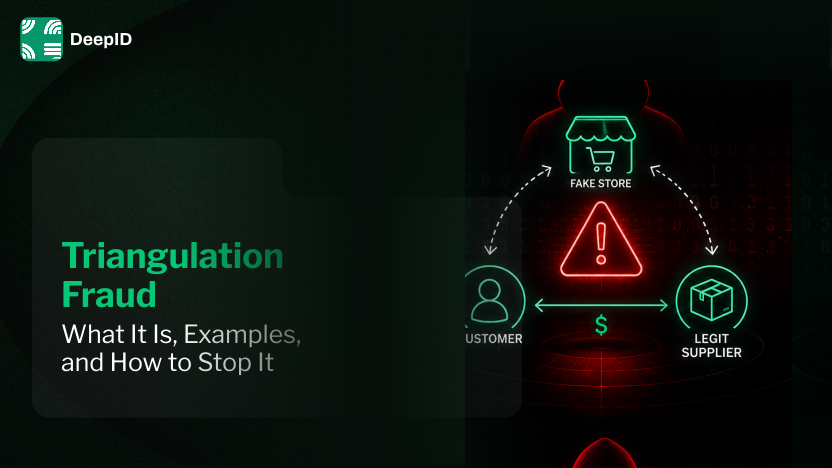
Triangulation fraud is an online shopping scam or ecommerce fraud with three players: a real buyer, a scammer, and a real seller. The scammer runs a fake online store. A buyer pays him for a product. He then uses a stolen credit card to order that same product from a real seller and gets it delivered to the buyer. The buyer gets the product. The scammer keeps the money. You, the real seller, lose both.
The dangerous part? Nothing looks wrong until the complaints start coming 30 to 60 days later.
Key Takeaways
Triangulation fraud involves a buyer, a scammer, and a legitimate seller.
Buyers often don't realize they're part of the fraud.
Merchants usually discover the fraud only after chargebacks.
Device intelligence helps identify repeat fraudsters before orders are shipped
What Is Triangulation Fraud?
The scam has three faces, like a triangle. That is where the name comes from. On one corner is a normal buyer looking for a good deal. Another one is a real seller running an honest business. The scammer sits in the middle and cheats both without them knowing.
How Does Triangulation Fraud Work?
The scam follows the same five steps almost every time.
Scammer opens a fake store: It can be an Instagram page, a seller account on a shopping app, or a full website. Prices are kept 30 to 50 percent cheaper than everywhere else. Discounts attract buyers quickly.
Scammer orders the same product from a real seller, but he pays with a stolen credit card. For delivery, he enters the buyer's home address.
Product reaches the buyer: It is a genuine product, so the buyer is happy. Some even leave 5-star reviews.
Real seller gets a chargeback: After a few weeks, the person whose card was stolen sees a charge he never made. He complains to his bank. The bank pulls the money back from the seller. This is called a chargeback. The seller loses the product, the money, and pays a penalty fee on top.
The scammer then repeats the process using another stolen payment card. One fake store can run hundreds of such orders before anyone notices.
What is an Example of Triangulation Fraud?
Say a buyer in Jaipur sees wireless earbuds on an Instagram store for Rs 1,499. Everywhere else, the same pair costs Rs 2,999. He pays through UPI and shares his address.
The scammer then goes to a real shopping site, orders the same earbuds from a genuine seller using a stolen credit card, and puts the Jaipur address for delivery. The earbuds arrive in three days. The buyer is happy.
Two months later, a woman in Mumbai sees a Rs 2,999 charge on her card that she never made. She complains to her bank. The bank takes the money back from the seller. The seller loses the earbuds, loses Rs 2,999, and pays a penalty fee too. The Instagram store has already been deleted. The scammer keeps the buyer's Rs 1,499 and walks away.
Why Is Triangulation Fraud So Hard to Detect?
Because every order looks normal on its own. The address belongs to a real person. The product got delivered. No complaint, no return, nothing odd at checkout. Fraud systems look for things that do not match.
"Every order passed our checks. Real names, real addresses, on time deliveries. We only saw the problem when the chargebacks started coming," says a risk manager at a Delhi based online seller.
You only find out when the chargeback lands. By then, the product is already gone. Scammers change cards and accounts, but they often reuse the same device. These are their weak points.
Who Loses Money in Triangulation Fraud?
The real seller loses the most: You lose the product, the sale money, and the delivery cost. Every chargeback also comes with a penalty fee, typically ranging from Rs 500 to Rs 1,500 in India, which you never get back. Too many chargebacks, and your payment gateway can fine you or block your account.
The card owner loses peace of mind: He finds a charge he never made, blocks his card, and spends days fixing it with the bank.
The buyer loses without knowing it: His money went to a criminal. His address is now part of a fraud trail. And if the product breaks, the fake store is gone. No return, no support.
Merchant Best Practices
These are the tips a merchant follows to reduce the chances of fraud:
Monitor repeat devices across accounts.
Review unusually discounted marketplace referrals.
Verify high-value orders from newly created accounts.
Combine device intelligence with payment risk checks.
Delay shipment for high-risk orders until additional verification
How Do You Detect and Prevent Triangulation Fraud?
The card and the address will not expose the scammer. Device intelligence can often reveal the scammer's device. Watch for these signs:
One device linked to multiple payment cards: One device placing orders with five different credit cards. A strong fraud indicator.. Track it.
New accounts that buy instantly: No browsing, no wishlist, just a straight expensive order.
Hidden locations: Scammers use VPNs and fake devices called emulators to hide where they really are. Flag such traffic.
Too many orders, too fast: Many orders from the same device or internet connection under different names within hours.
Normal payment checks cannot see these signs; device intelligence can. Tools like DeepID SDK give every device a unique fingerprint. The scammer can change cards and names all day, but the device stays the same, and it gives him away.
Conclusion
Triangulation fraud is difficult to detect because the buyer, delivery address, and product all appear legitimate. Merchants often discover the fraud only after a chargeback. Device intelligence helps uncover patterns that traditional payment checks may miss.
FAQs
Ques: What Is Triangulation Fraud in Simple Words?
Ans: It is a scam with three people. A fake online store takes money from a real buyer. Then it uses a stolen credit card to order that product from a genuine seller. The buyer gets the product, the scammer keeps the money, and the seller loses everything when the chargeback comes.
Ques: Is the Buyer at Fault in Triangulation Fraud?
Ans: No, the buyer does not know a scam is happening. He paid for a product and received it. But his money went to a criminal, his address is now linked to a fraud, and if he needs a return or support, the fake store has vanished.
Ques: How Do Sellers Detect Triangulation Fraud?
Ans: By watching the device, not just the card. The big signs are one device using many cards, brand new accounts placing instant orders, billing and delivery addresses that keep mismatching, VPN or emulator traffic, and too many orders from one device in a short time.
Ques: How Does Device Intelligence Stop Triangulation Fraud?
Ans: Device intelligence gives every phone or computer a unique fingerprint. Scammers can change cards, names, and emails easily, but they mostly use the same device. When one device shows up with many cards and identities, the system flags it before the order ships.
All article tags
Related Articles
September 28, 2026
What is Behavior Analysis and how does it prevent fraud?

September 10, 2026
How to Prevent Password Sharing: A Complete Guide for SaaS & Streaming Platforms
August 31, 2026
How to Prevent Coupon Fraud? Effective Strategies
August 27, 2026
DoT SIM Binding Mandate Explained: Compliance Guide for Communication Apps (2026)
Identify your web and
mobile traffic in minutes
Collect visitor IDs and signals instantly for free,
or reach out to our team for a demo.
250+
countries and territories where we identified devices_
4 Billion +
unique browsers and mobile devices identified_
50 Million +
real-time device intelligence API events per day processed_